Sales director
Reads pipeline health, forecast risk, approval backlog, and whether the team is following through on what it committed to.
A generic CRM assumes a sale is one lane with a percentage against each step. If yours turns on technical fit, a priced solution and a clean handoff into delivery, the system has to hold those in order.
Model the commercial workflow first. Reporting and integrations follow once the handoffs are trustworthy.
A custom CRM holds the records, responsibilities, and decisions that move an opportunity through qualification, a priced solution, internal approval, and delivery kickoff. Sales, finance, and delivery read the same value, the same terms, and the same next step—instead of three trackers and an inbox thread that only one person has seen.
Opportunities get mislabeled because qualification, solution design, and approval happen in a different order than the stock pipeline allows, and the forecast inherits the error.
Scope, rates, discount, and margin need structured inputs and a review step—not a free-text note stapled to a deal.
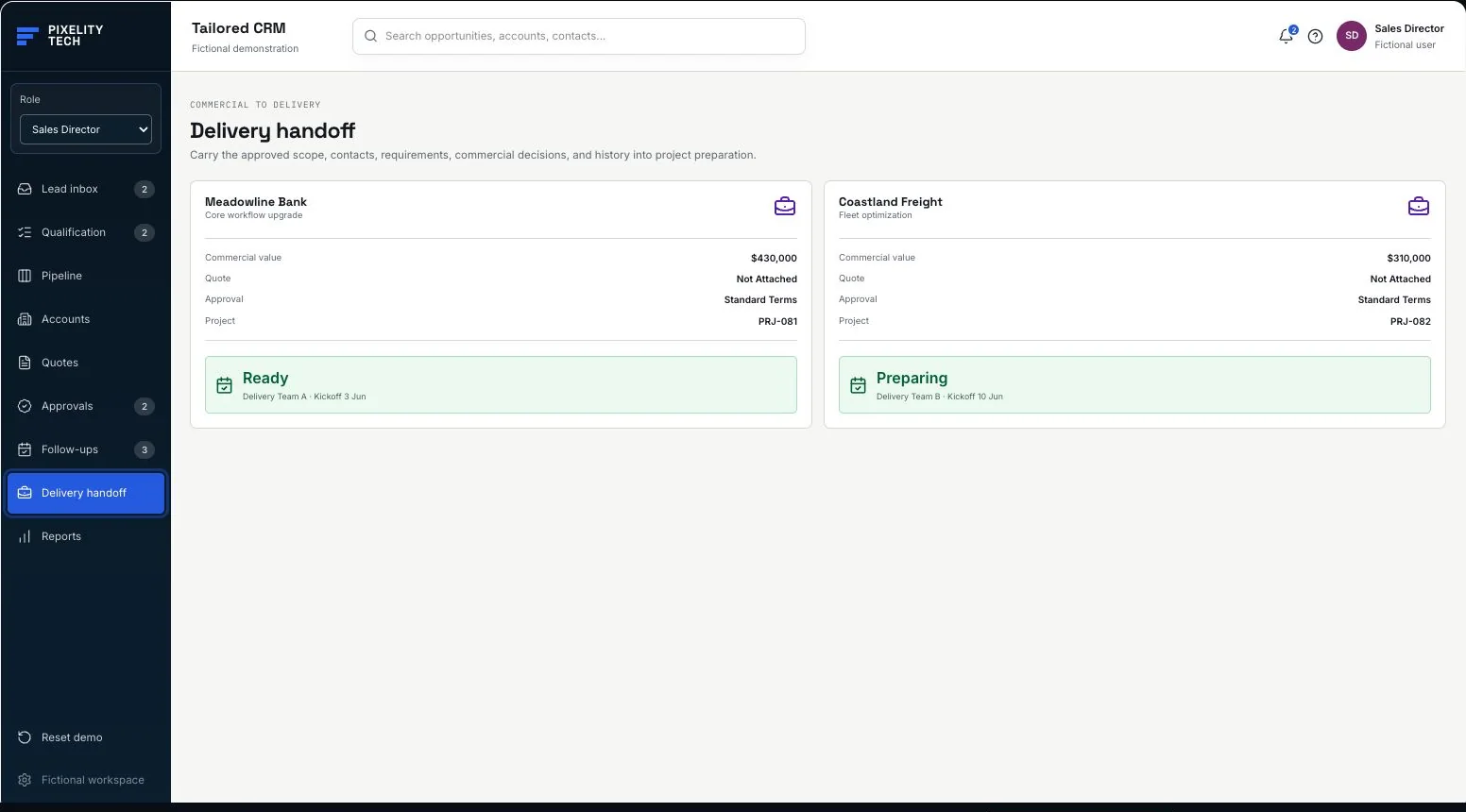
What was promised, assumed, and priced stays with the person who sold it, and the delivery team finds out at the kickoff meeting.
An opportunity has to clear technical fit, budget confirmation, stakeholder mapping, and risk review before the quotation step opens at all.
Scope lines, resource assumptions, rates, and discount produce a quotation with projected margin and the approval it triggers—so a thin deal meets finance before it meets the customer.
Approved terms, documents, and responsibilities become the delivery record without re-keying. In RayaOS, the operating platform Pixelity built for UAE real-estate brokerages, that means leads, listings, deals, documents, and rentals in one product rather than a generic opportunity record renamed.
Captured from Pixelity's fictional product demonstrations. Organizations, people, and records shown are synthetic.
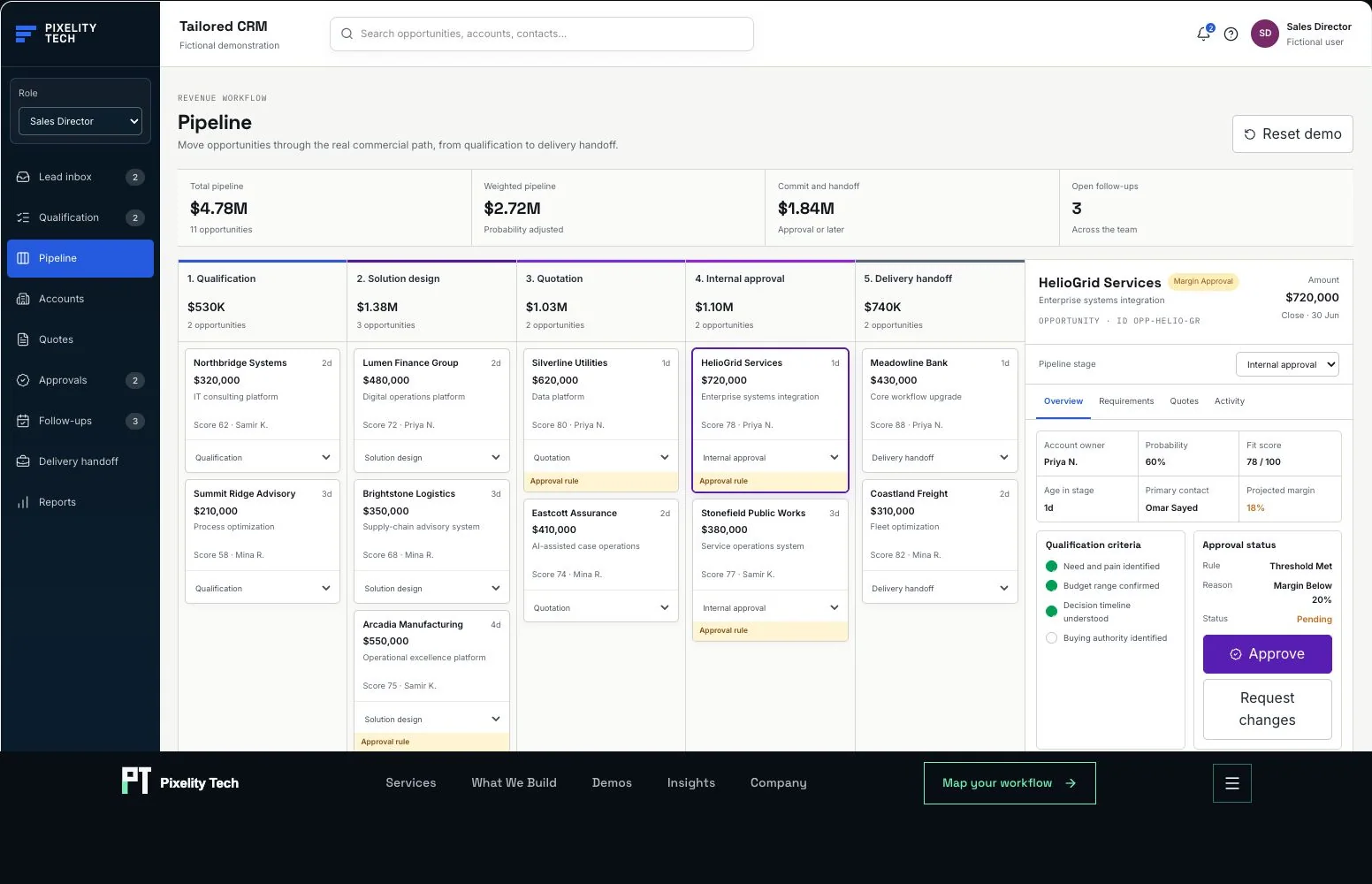
Stage definitions, required fields, and allowed transitions taken from the real qualification path, so pipeline position is a fact rather than an opinion.
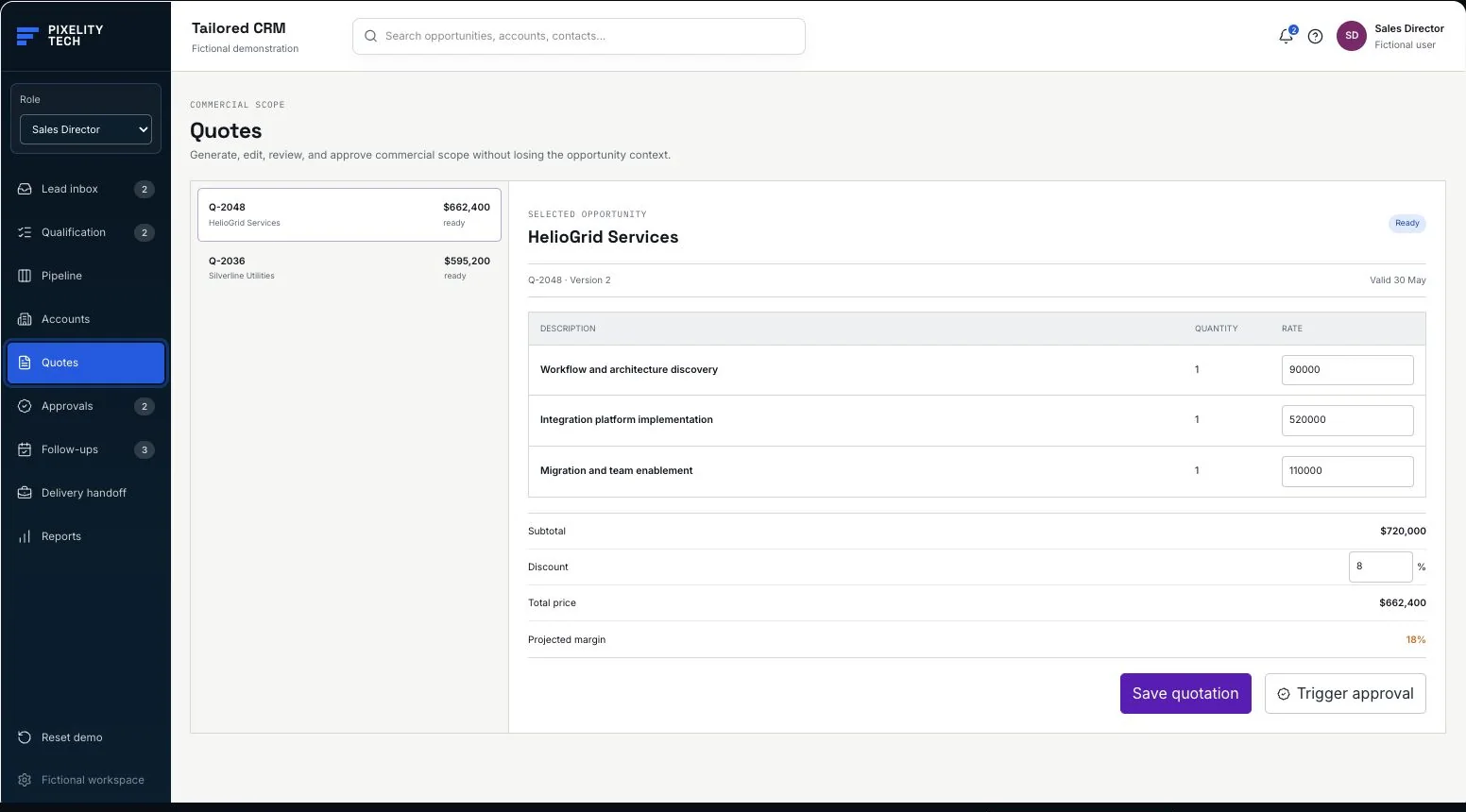
Structured scope, rates, discount rules, and the margin figure visible before the quote goes out—not after it is accepted.
Value and margin thresholds send the deal to the person authorized to accept it, with the scope and pricing attached to the request.
Tasks, owners, due dates, and linked opportunities, so commercial momentum is visible to the team rather than tracked privately.
Reads pipeline health, forecast risk, approval backlog, and whether the team is following through on what it committed to.
Owns opportunity detail, quotation inputs, customer communication, and handoff readiness.
Checks margin, discount policy, payment terms, and commercial risk before the business is committed.
Email and calendar for activity history, with the opportunity record rather than an inbox remaining the source of truth.
ERP or operations platform, so an approved deal arrives as scheduled work with capacity and stock behind it.
Document storage for proposals, contracts, and signed terms, linked to the opportunity they belong to.
Lead sources and marketing systems for attribution and the qualification data that arrives with the inquiry.
Team and territory permissions, so customer and pricing visibility follows the account rather than the whole database.
Approval authority tied to role, value, and margin threshold rather than to who is most senior in the thread.
Audit trail on quotation changes, approvals, and handoff events.
Export controls on customer and pricing data, which is the asset most likely to leave with someone.
A fictional commercial workflow: qualification, a priced quotation, approval, and the handoff that carries the terms into delivery.
Open the demonstrationDocument users, records, decisions, exceptions, integrations, and the smallest release that creates measurable operational value.
Prototype the real screens, permissions, and rules so stakeholders react to a visible system before engineering scope hardens.
Deliver one dependable workflow at a time with testable data, ownership, and reporting—not a long hidden build cycle.
Train users on the live workflow, monitor exceptions and adoption, and extend the platform only when the foundation is stable.
Describe it in a sentence or two. We will come back with what we would build first, what it would take, and whether you actually need us for it.