Pixelity Tech / Field note
AI Automation Versus Rules-Based Automation
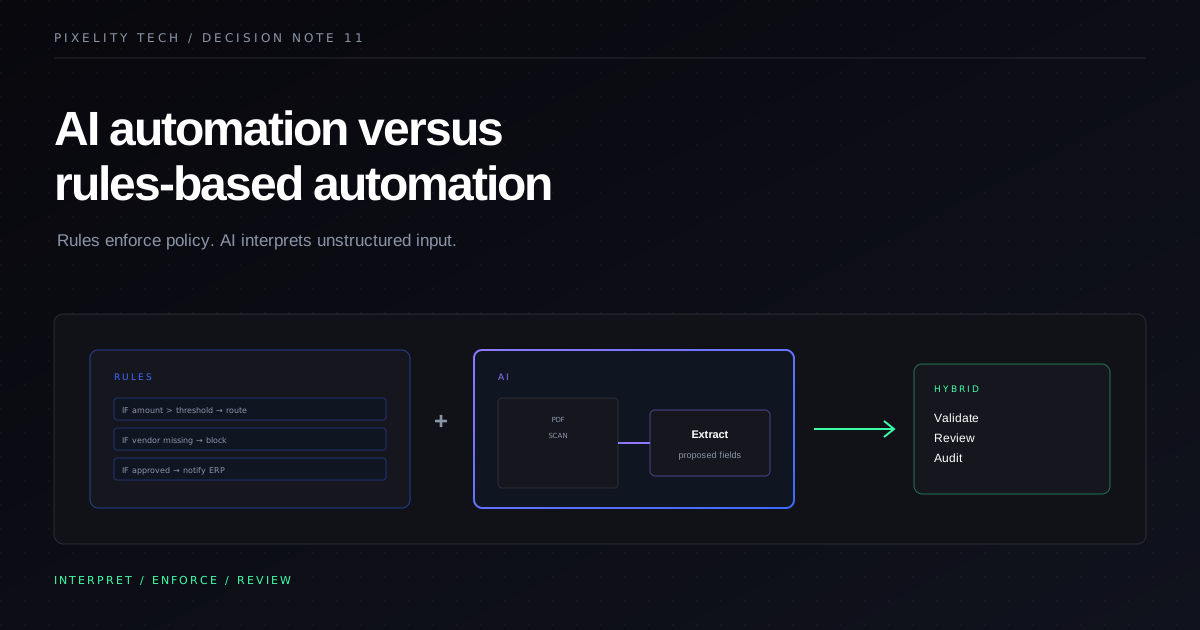
Rules execute policy. AI interprets unstructured input. Learn when each approach fits, how to combine them, and why human review belongs in the architecture.
Automation conversations increasingly assume artificial intelligence. Models can read documents, classify intent, summarize threads, and suggest next actions. The capability is real. So is the confusion about where it belongs.
Many workflows do not need AI. They need clear rules applied to structured data: thresholds, categories, validations, and routing that execute the same way every time. Other workflows cannot be expressed as rules alone because the input is messy — PDFs, scans, email bodies, photos, or language that varies by supplier and region.
Choosing between AI automation and rules-based automation is not a branding decision. It is an architecture decision about predictability, evidence, cost, and accountability.
Define the two approaches
Rules-based automation encodes explicit conditions. If category equals maintenance and amount exceeds threshold, route to facilities director. If required fields are missing, block submission. If status is approved, notify fulfillment.
Rules are deterministic. Given the same inputs, they produce the same outputs. They are auditable. Stakeholders can read them, debate them, and version them.
AI automation uses models to interpret unstructured or variable input: extract fields from an invoice, classify a support message, match a line description to a catalog, detect anomalies in free text.
AI outputs are probabilistic. Confidence varies by document quality, phrasing, and domain drift. AI can accelerate work dramatically, but it requires validation, monitoring, and human authority for outcomes that matter.
Neither replaces the need for workflow design. Both depend on mapped processes, named owners, and exception handling.
When rules-based automation is the right tool
Prefer rules when:
- inputs are structured or can be made structured at intake;
- policy can be stated without case-by-case invention;
- outcomes must be explainable to auditors, customers, or regulators;
- errors must be impossible or blocked, not merely unlikely;
- the organization needs predictable operating cost.
Classic examples include approval thresholds, role-based routing, SLA timers, duplicate detection on identifiers, and validation against reference lists.
Rules also belong at the boundaries of AI systems. A model may propose a vendor code, but a rule should enforce that the code exists in the approved list before payment is released.
The automate approvals use case is predominantly rules-driven: categories, limits, evidence requirements, escalation paths. AI might assist intake, but authority remains in explicit policy.
When AI automation earns its place
Consider AI when:
- a large share of work arrives as documents, images, or unstructured text;
- manual reading and re-entry dominate cycle time;
- wording varies but meaning is stable enough to learn;
- perfect accuracy on day one is unrealistic, but faster first-pass handling is valuable;
- humans already perform interpretation — software should augment, not pretend to eliminate, that step.
Invoice processing, contract intake, insurance claims triage, and operations inbox review are common examples. The value is not “no humans.” The value is consistent first-pass extraction, classification, and queueing so humans review exceptions instead of every page.
The AI document operations demo shows this pattern: source evidence beside extracted fields, confidence signals, validation rules, review queues, routing history, and audit trails. AI proposes. Rules validate. Humans decide ambiguous cases.
Compare on dimensions that matter to operations
| Dimension | Rules-based | AI-assisted |
|---|---|---|
| Predictability | High | Variable by input quality |
| Explainability | Direct | Requires evidence and confidence |
| Setup cost | Policy mapping | Data samples, evaluation, guardrails |
| Ongoing cost | Change control | Monitoring, retraining, drift |
| Failure mode | Blocked or misrouted | Plausible wrong answers |
| Best input | Structured fields | Unstructured documents |
Use the table to resist vendor narratives. If a vendor shows AI classifying records that already live in structured databases, ask why rules are insufficient. If a team proposes hundreds of brittle regex rules on free text, ask whether bounded AI extraction with review is safer.
The hybrid architecture most businesses need
Production systems rarely choose only one approach. A durable pattern looks like this:
- Ingest documents or messages into a governed queue.
- Extract or classify with AI where input is unstructured.
- Validate with rules against business constraints and reference data.
- Route with rules based on category, thresholds, and risk.
- Review exceptions and low-confidence cases with humans.
- Post outcomes to systems of record through integration.
- Audit every automated proposal, human correction, and downstream action.
AI belongs where interpretation saves time. Rules belong where policy must be enforced. Humans belong where accountability cannot be delegated.
This is the substance of introduce AI safely: not a slogan about “human in the loop,” but concrete controls wired into the workflow.
Anti-patterns in AI automation projects
AI without validation. Letting a model populate payment fields with no checks against vendors, tax rules, or totals invites silent financial errors.
Rules without ownership. Hard-coding hundreds of conditions in application code without a process owner ensures policy drift becomes a developer queue.
Confidence theater. Displaying a percentage without defining what happens at each band — auto-accept, sample audit, mandatory review — leaves users guessing.
Automating rejection of responsibility. Models can suggest; they should not be configured to approve high-risk outcomes because no human wanted to sign the workflow design.
Replacing source-of-truth design. If identifiers conflict across CRM, finance, and operations tools, AI will harmonize the wrong data faster. Fix operational truth first.
Anti-patterns in rules-only projects
Regex sprawl on natural language. Maintaining fragile text parsers for dozens of supplier formats often costs more than bounded document AI with review.
Rules copied from email folklore. “That is how Sarah handles it” is not a rule set. Map policy before encoding.
Automation before states exist. Rules that notify people about unclear work increase noise. Name states and owners first, as described in when not to automate a process.
Evaluation criteria before you build
Answer these questions with stakeholders:
- What input format arrives most often?
- What decision must be explainable six months later?
- What error is unacceptable versus recoverable?
- Who owns policy changes?
- What volume justifies model cost and monitoring?
- Where will humans remain accountable regardless of automation?
If explainability and blocking errors dominate, lean rules. If unstructured volume dominates and humans already read everything, lean AI with validation and review.
Pilot on a single category with measured accuracy, cycle time, and exception rate. Compare against the manual baseline, not against a demo.
Operating AI automation in production
Models change. Suppliers change layouts. Language drifts. Production AI automation needs:
- thresholds tied to actions, not dashboards only;
- sampling of auto-processed items for quality audits;
- feedback loops when reviewers correct fields;
- versioning of prompts, models, and rules together;
- incident paths when accuracy drops or a provider fails.
Rules change too, but through policy governance. Treat both as operational assets with owners, not as launch-day configuration.
AI document processing systems combine these layers intentionally: extraction, validation, human review, routing, and audit — rather than a single model call presented as finished software.
Sequencing a roadmap
A practical sequence:
- Map the workflow and name owners.
- Automate structured routing with rules where data already exists.
- Add AI to the highest-volume unstructured intake.
- Enforce validations and exception queues.
- Integrate postings to systems of record.
- Expand categories after measured stability.
This aligns with what should a business automate first: a contained production slice, not a broad AI initiative with unclear accountability.
Choose tools that match accountability
Executives fund outcomes: fewer touches, faster approvals, fewer posting errors, safer handling of sensitive documents. Engineers choose mechanisms. The mechanism must serve the accountability structure, not the other way around.
Rules-based automation should be readable by operations. AI automation should show evidence beside every proposal. Both should write history that compliance and customer service can trust.
Pixelity’s AI-enabled software service designs hybrid workflows this way — rules where policy is clear, models where interpretation is costly, humans where authority remains.
If you are deciding whether your next automation step needs AI, rules, or both, map your workflow with Pixelity Tech and define the control points before implementation begins.
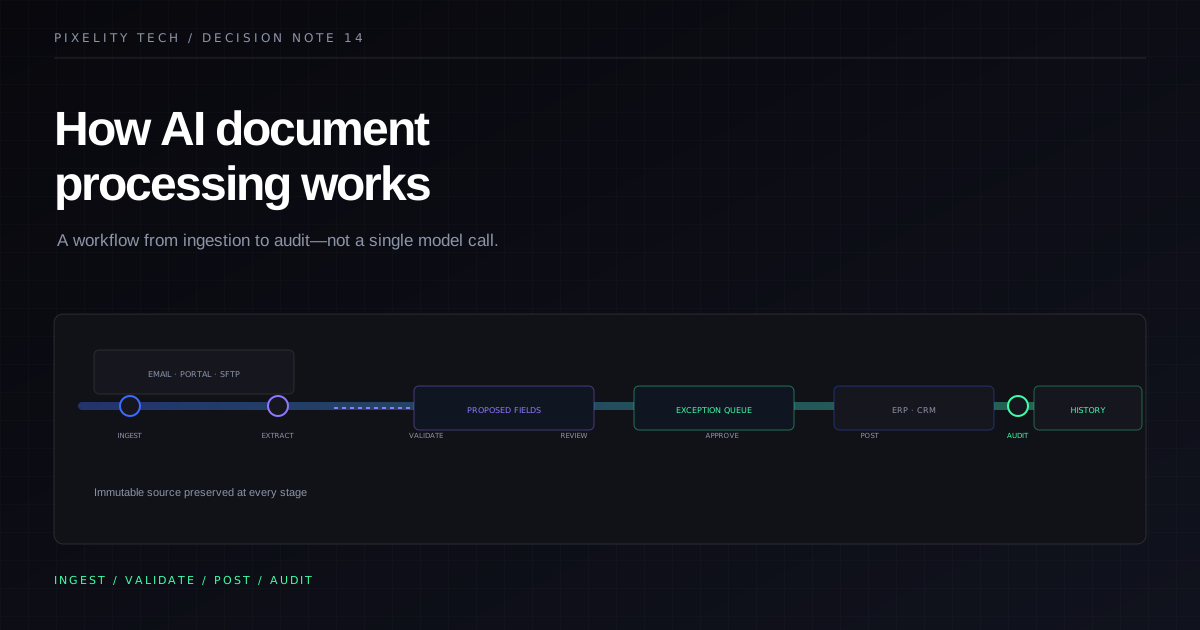
How AI Document Processing Works
AI document processing is a workflow—not a single model call. Follow the path from ingestion and extraction through validation, human review, routing, and audit.
Read field note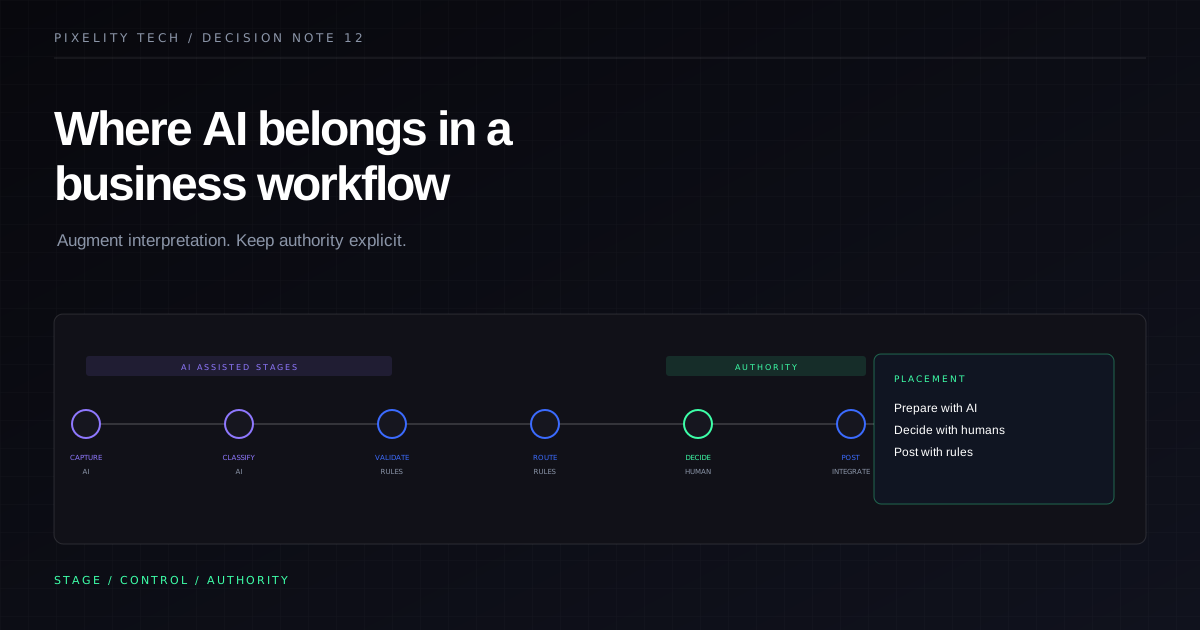
Where AI Belongs in a Business Workflow
AI creates the most value at specific workflow stages—not everywhere. Use this placement model to augment intake, classification, and preparation while keeping authority explicit.
Read field note